Remote Closings What You Should Know.
Jan 31 2026 15:12
Are In-Person Closings Dead? What Remote Online Notarization (RON) Actually Looks Like in NJ
![[HERO] Are In-Person Closings Dead? What Remote Online Notarization (RON) Actually Looks Like in NJ](https://cdn.marblism.com/VPDcsGrMV3k.webp)
Remember when closing on a house meant clearing your calendar, putting on business casual, and sitting in a conference room for an hour while someone pushed papers across a table at you? Those days aren't exactly gone, but they're definitely not the only option anymore.
Remote Online Notarization, or RON for short, has officially arrived in New Jersey. And it's changing the way real estate closings happen. But before you start thinking that in-person closings are headed for extinction, let's pump the brakes. The reality is a lot more nuanced, and honestly, a lot more interesting.
What Is Remote Online Notarization, Anyway?
RON is exactly what it sounds like: getting documents notarized remotely through an audio-visual connection. Instead of meeting a notary face-to-face, you hop on a secure video call from wherever you are, your living room, your office, a hotel room in Florida, and handle the whole thing digitally.
New Jersey legalized RON as a legitimate alternative to traditional notarization, which means it carries the same legal weight as an in-person session. The difference? You're doing it through a screen instead of across a desk.

For real estate transactions, this is a game-changer. Title insurance and closing documents that once required you to physically show up can now be handled from virtually anywhere with a solid internet connection. No traffic. No waiting rooms. No shuffling papers around while trying to remember if you initialed page 14.
The Convenience Factor: Closing From Your Couch
Let's be real, life is busy. Between work schedules, kids, travel plans, and everything else on your plate, coordinating a closing time that works for everyone involved can feel like herding cats. RON eliminates that headache.
Got a closing scheduled but you're out of state? No problem. Still at the office when the notary is ready? Fire up your laptop. Dealing with a complicated transaction that involves multiple parties in different locations? RON makes it exponentially easier to get everyone on the same virtual page.
And here's where it gets even better: the process is often faster . Without the logistical nightmare of scheduling in-person meetings, coordinating travel, and dealing with last-minute reschedules, closings can move along at a much quicker pace. For investors flipping properties or buyers working with tight timelines, that speed matters.
How Identity Verification and Security Actually Work
Now, I know what you're thinking: "This sounds great, but isn't it easier for someone to commit fraud through a video call?"
Actually, no. RON might even be more secure than traditional in-person notarizations.
Here's why: the identity verification process for RON in New Jersey is no joke. Notaries can verify your identity through one of three methods, personal knowledge, a credible witness providing sworn testimony, or at least two different types of identity proofing. That last one typically involves knowledge-based authentication (answering questions only you would know) combined with credential analysis (verifying your government-issued ID through sophisticated software).
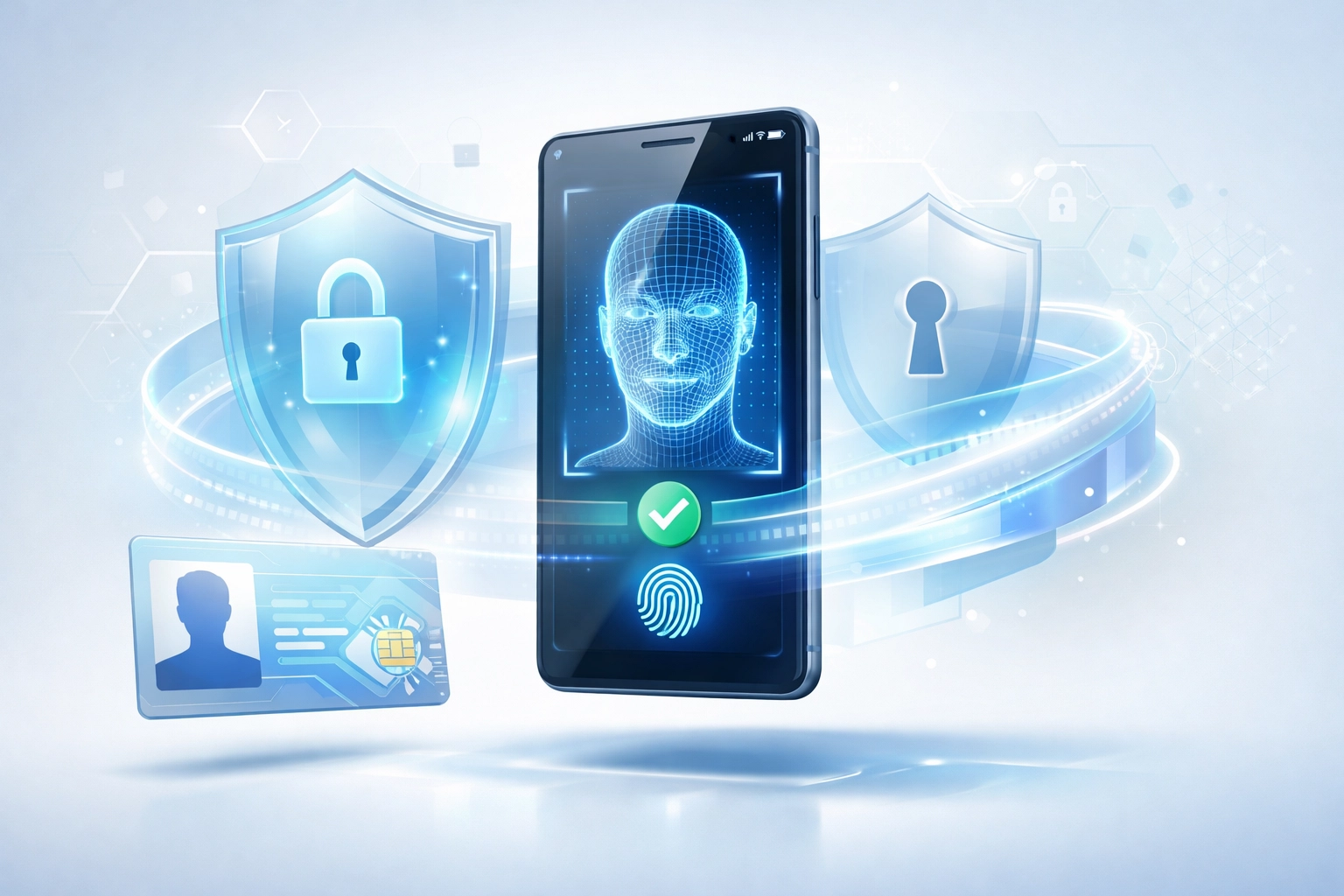
The entire session is recorded via audio and video. Every word, every signature, every confirmation, it's all captured and stored securely. Compare that to a traditional closing where there's no recording, no digital trail, and identity verification might just be a quick glance at your driver's license.
Plus, the technology platforms approved for RON in New Jersey, like BlueNotary, Clear Sign, DocVerify, and others, are required to meet strict security standards. We're talking encrypted connections, tamper-evident seals on electronic documents, and multi-factor authentication.
The result? A closing process that's not only convenient but also locked down tight against fraud.
The Process: What a RON Session Actually Looks Like
So what does a remote closing actually entail? Let's walk through it.
First, if you're dealing with paper documents (which can only be notarized remotely for acknowledgments of signatures in NJ), you'll send them to the notary ahead of time. Electronic documents have broader applicability and are generally the smoother option.
When it's time for the session, you'll log into the approved RON platform. The notary will walk you through the identity verification steps, this might include scanning your ID, answering some authentication questions, or having a witness verify who you are.
Once your identity is confirmed, the notary will ask if you understand the document and are willing to sign it. They'll check for any blanks or issues, then have you sign during the video session. You'll also provide a written declaration under penalty of perjury confirming that the document you're signing is the same one being notarized.
If you're working with paper documents, you have up to three days after the session to send the signed document and declaration back to the notary. The notary then completes the certificate of notarial act, attaches an electronic seal, and applies their digital signature.
The whole thing is typically wrapped up in 20-30 minutes, depending on the complexity of your documents. And you never have to change out of your sweatpants.
So, Are In-Person Closings Really Dead?
Short answer: no. In-person closings aren't dead: they're just becoming the "vintage" option.
New Jersey allows both in-person and remote online notarizations, and both are completely legal and valid. Some people simply prefer the traditional approach. Maybe they like the ritual of sitting down at a table and physically signing papers. Maybe they're not comfortable with technology. Maybe they just want to shake hands and feel like the deal is "real."

And that's totally fine. The beauty of where we are right now is that you get to choose. RON isn't replacing in-person closings: it's adding another option to the menu.
Certain transactions might still benefit from face-to-face interaction, especially if there are complicated questions or multiple parties who need to be in the same room hashing things out. And let's not forget that some older clients or those without reliable internet access might find traditional closings more accessible.
The future of real estate closings isn't about one method killing the other. It's about flexibility.
How American National Land Transfer Stays Ahead of the Curve
At American National Land Transfer , we're not just watching these changes happen: we're actively offering solutions that put you in control.
Whether you want to close from your kitchen table via RON or prefer the traditional conference room experience, we've got you covered. Our team is trained and equipped to handle both remote and in-person closings with the same level of professionalism and attention to detail.
We also understand that title insurance and closing costs can feel overwhelming, especially if you're trying to budget for a transaction. That's why we offer tools like our NJ title insurance calculator to help you understand what you're working with before you commit. Transparency matters, whether you're closing remotely or in person.
The tech-forward approach doesn't mean we sacrifice the personal touch. Our team is still here to answer your questions, walk you through the process, and make sure you feel confident about every step. We just happen to offer that support through whatever channel works best for you: video call, phone, email, or face-to-face.
What You Need to Know Before Your First RON Closing
If you're considering RON for your next real estate transaction, here are a few practical tips to keep in mind:
Make sure your tech is up to par. You'll need a computer or tablet with a webcam, a microphone, and a stable internet connection. Test everything ahead of time to avoid last-minute technical hiccups.
Have your ID ready. A government-issued photo ID is typically required for identity verification. Make sure it's current and not expired.
Understand what documents are eligible. In New Jersey, paper documents can only be notarized remotely for acknowledgments of signatures. Electronic documents have broader flexibility, so ask your title company what format makes the most sense for your transaction.
Plan for a quiet environment. The notary session is recorded, so you'll want to be in a space where you can focus without distractions or background noise.
Ask questions. If you're new to RON, don't be shy about asking your title company to walk you through the process before the session. There's no such thing as a dumb question when it comes to closing on property.
The Bottom Line
In-person closings aren't dead: they're just sharing the stage with a newer, faster, more flexible option. Remote Online Notarization is here to stay in New Jersey, and it's offering buyers, sellers, and investors a level of convenience that simply wasn't possible a few years ago.
The security measures are solid. The process is straightforward. And the flexibility is hard to beat.
At the end of the day, the best closing method is the one that works for you . Whether that's sitting across from a notary with a pen in hand or logging into a video call from your couch, American National Land Transfer is ready to make it happen.
Curious about how RON could work for your next transaction? Reach out to our team and let's talk through your options. We're here to make the closing process as smooth as possible( no matter where you're sitting.)